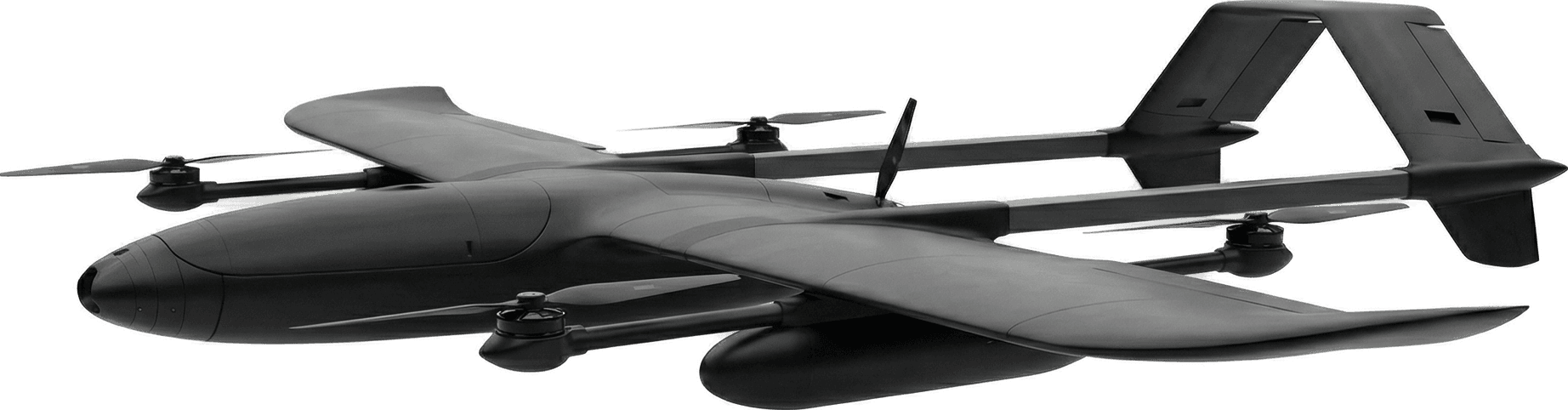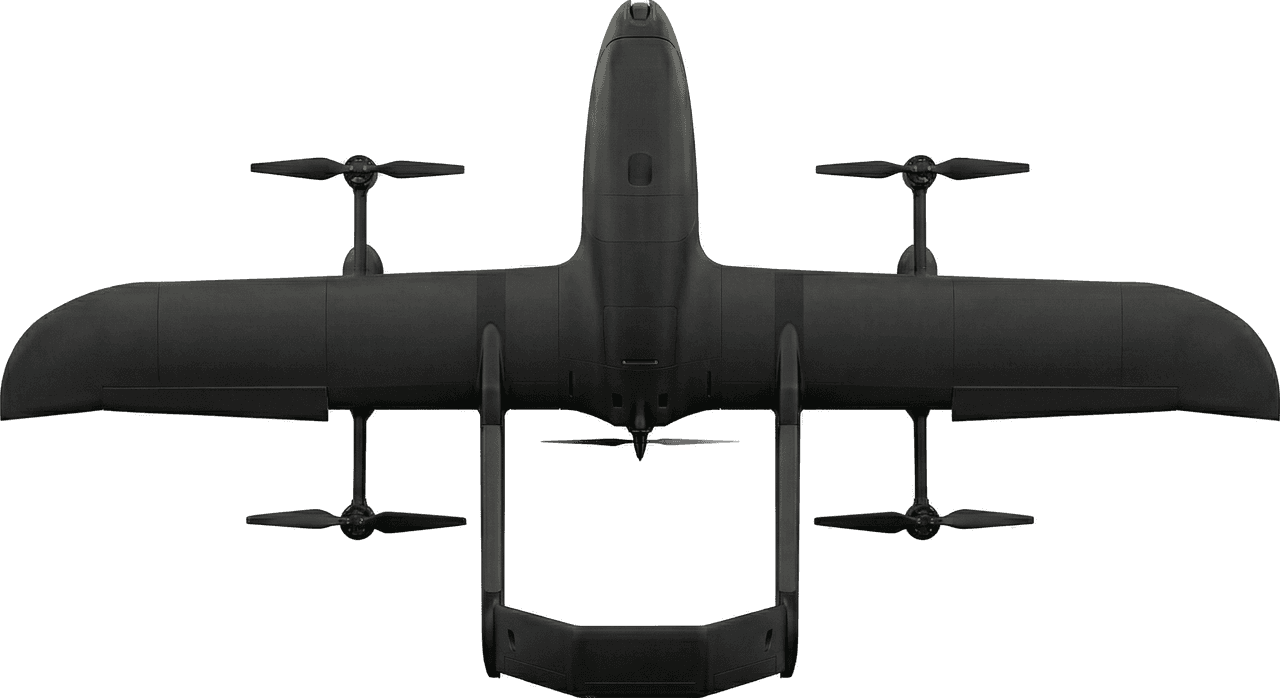
A medium-range, trivially deployed, attritable VTOL system for operators who measure success in sorties, not airframes.
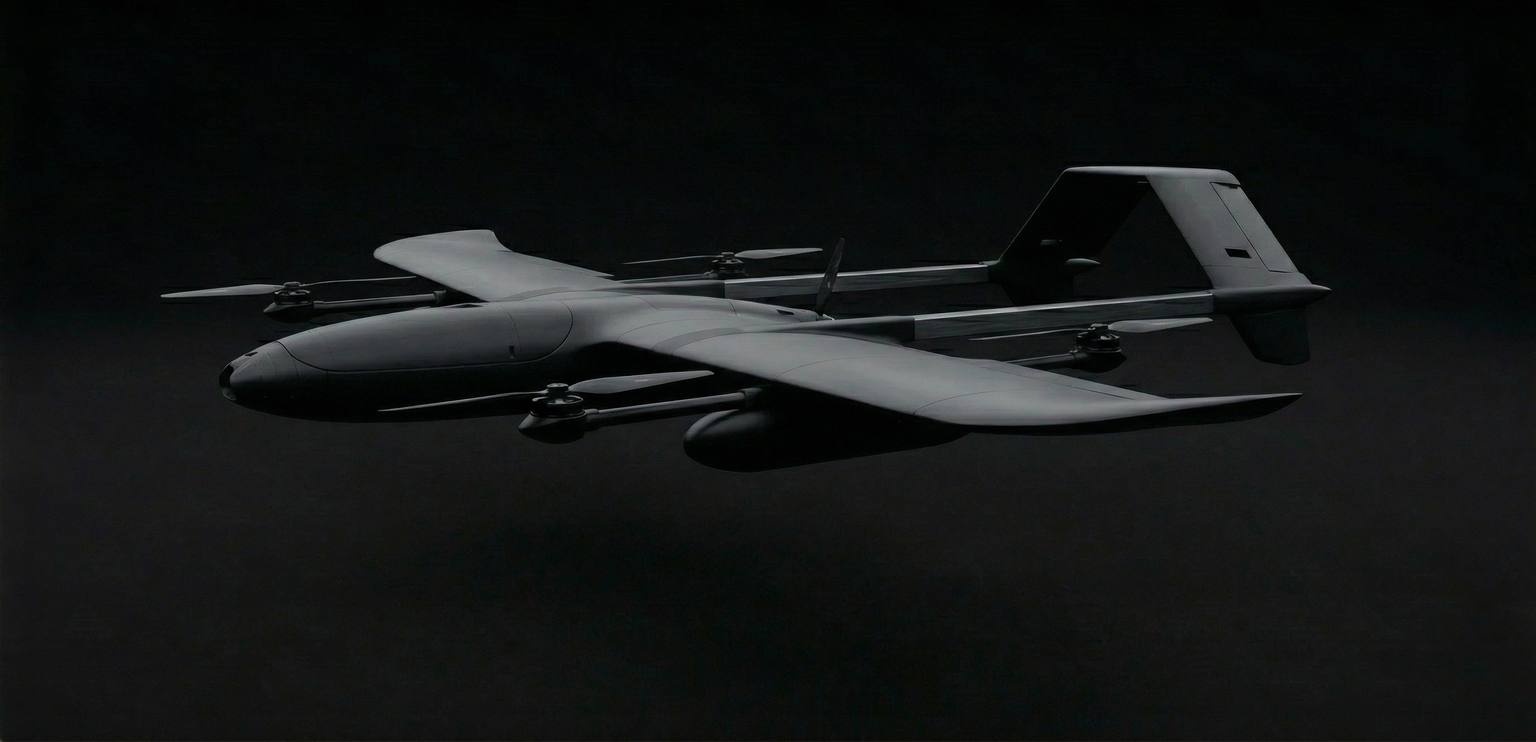
Designed and manufactured in COLOMBIA.
Specs that matter to operators on the ground — not a data sheet, a mission profile. Sustained, repeatable performance.
One airframe, four mission profiles. Reconfigure between sorties, not between programs.
Persistent overwatch with EO/IR fusion. Stand-off observation across 70 km of contested airspace, beyond visual line of sight, with full-motion imagery streamed back over an encrypted datalink.


Three constraints we removed at the spec — so you don't have to design around them.
Nominal deployment cadence with a two-person crew. Recover, swap, relaunch in under nine.
Crate cracked. Crew of two.
Power-on BIT, sensor cal, datalink check.
Waypoints + ROE pushed to autopilot.
Visual check, propeller arming, GPS lock.
Vertical takeoff, transition to wing-borne flight.
Climbing to mission altitude.
Full sensor sweep. Mission live.
Engineered around the failure modes that ground other platforms — heat, dust, weak signal, no second chance.

Mission planning, automated transitions, contingency-aware autopilot. Hands-on-stick optional, never required.
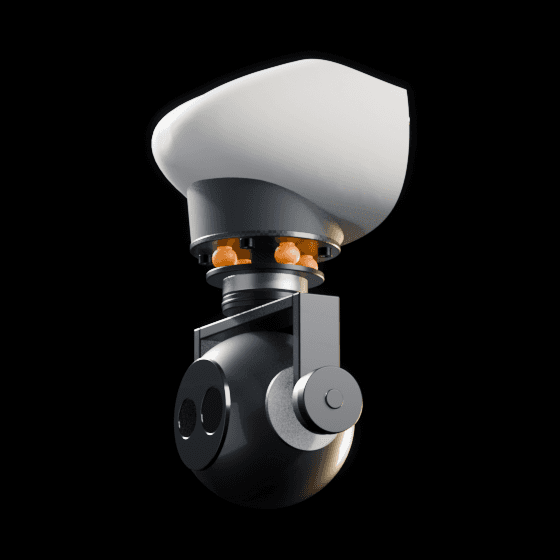
Stabilized gimbal carries electro-optical and thermal imagers in a single sortie. Day, night, smoke, dust.
Tool-less pack change in under two minutes. Sustained sortie generation without a depot or charging crew.
Quad-lift rotors for vertical phase; pusher propeller for cruise. Battery-isolated motor pods reduce single-point failure on lift transition.
Three independent flight-control units, voting in software. Mission continues on single-controller failure; degraded recovery on dual.
AES-256 over a frequency-hopping mesh radio. LOS to 70 km, BLOS via SATCOM relay. Open architecture for customer-side encryption.
10 kg / 14 L bay with standardized power, ethernet, and CAN bus. Swap EO/IR, SAR, comms, or LIDAR without ground tooling.
Tool-less Li-ion pack change in under two minutes. Sortie-rate sustained without a depot or a charging crew on-site.
Visual-inertial fallback with terrain-relative reference. Mission continues through jamming or canyon shadow without operator intervention.
Operational radius from a single launch point. Concentric rings illustrate the platform's reach versus sortie duration.
From a single launch point, the ED-4 owns roughly 15,400 km² of air. That's a perimeter, a fire-line, and three pipelines — all from one crew, one case, one battery rotation.
Lead times, compliance, integration. Send anything else through the form below.
We don't publish list pricing. The platform is engineered for an order-of-magnitude lower cost-of-loss than comparable Group 2 fixed-wing UAS. Contact us with mission profile and quantity for a configured quote.
Yes. The ED-4 is built on a Section 848-compliant supply chain. We can provide a per-component country-of-origin manifest under NDA for customers who require it.
Yes. The bay is open architecture: standardized power (28 V), ethernet, and CAN bus. We provide a payload SDK and integration support; first-flight integration timelines run two to six weeks depending on payload complexity.
Initial customer units are eight to twelve weeks from PO, depending on payload configuration. We don't quote lead times we can't hold.
Yes, subject to U.S. export control. The ED-4 is ITAR-classified at the system level; we work with allied government and infrastructure customers under appropriate license.
Mission planning, transition, route, and contingency are autonomous. An operator is always in the loop for take-off authorization, mission-state changes, and payload release where applicable. Hands-on-stick is optional, never required.
Defense, public safety, infrastructure. If your mission fits inside 70 kilometers and 10 kilograms, we'd like to hear about it.